
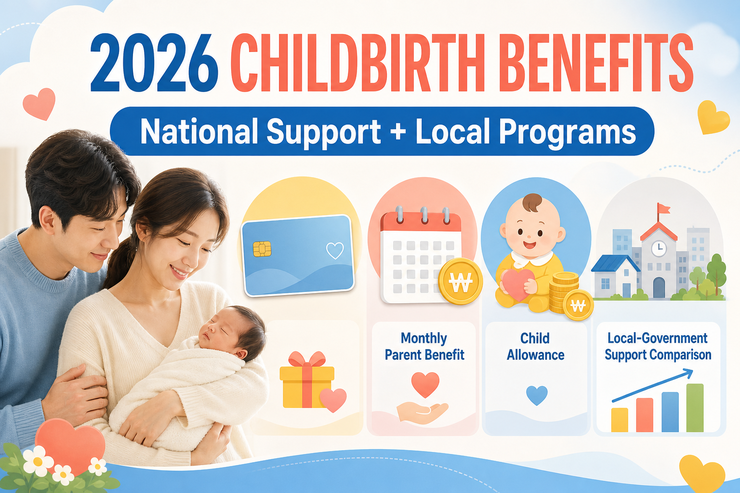
Families welcoming a baby in Korea may qualify for several national benefits as well as additional payments from their local government. The total can vary significantly by residence, birth order, and childcare arrangements. This guide summarizes three major national programs and the conditions to compare in local programs.
Three Major National Benefits
These national programs can generally be received together when eligibility requirements are met.
1. First Meeting Voucher
- A one-time benefit after birth
- KRW 2 million for a first child and KRW 3 million for a second or later child
- Provided as voucher credit linked to the National Happiness Card
- Usable at most businesses except excluded entertainment and gambling-related sectors
- Must be used within the authorized period after birth
2. Parent Benefit
- Generally paid monthly
- KRW 1 million per month for a child aged 0–11 months
- KRW 500,000 per month for a child aged 12–23 months
- If the child attends daycare, all or part may be provided as a childcare-services voucher, with any eligible difference paid separately
3. Child Allowance
- A monthly allowance for children below the age limit set by current law
- The program may include expanded age coverage or additional regional support under current policy
- Parents should confirm the child’s eligible period and current payment amount through Bokjiro or the local office
The combined national support can be substantial during a child’s early years. The exact total depends on birth date, birth order, daycare use, and the rules in force during each payment period.
Why Local Benefits Matter
Most provincial and municipal governments operate separate childbirth encouragement or congratulatory payments under local ordinances. Amounts, one-time versus installment payment, residence requirements, and birth-order rules differ significantly.
Areas experiencing severe population decline may offer larger benefits, especially for a third or later child. Large metropolitan governments may provide smaller local payments or none at all.
Where to Compare Local Programs
- Childcare portal: Search for pregnancy, childbirth, and parenting support by region.
- City, county, or district website: Search terms such as “childbirth incentive” or “birth congratulatory payment.”
- Bokjiro: Review national and local welfare programs together.
- Local community service center: Confirm residence history and the exact deadline for the household.
Conditions Often Missed
- Residence period: Many local governments require a parent or child to have maintained registration in the area for six months, one year, or another minimum period. Moving immediately before birth may not qualify.
- Payment schedule: Some programs pay once; others pay installments over several years. Moving away can stop future installments.
- Birth order: Benefits often increase for a second, third, or later child.
- Retroactive application: A new or expanded ordinance usually does not apply to children born before its effective date.
- Application deadline: Some benefits require an application within a set number of days or months after birth registration.
How to Apply Efficiently
- Register the birth and confirm the child’s resident registration.
- Ask about the integrated childbirth-service application available through the local office or Government24.
- Apply for the First Meeting Voucher, Parent Benefit, and Child Allowance.
- Check the city, county, and district programs for separate local applications.
- Save application confirmations and note installment dates and continued-residence requirements.
Planning Tips
- Calculate national benefits and local programs together before estimating the household’s total support.
- If considering a move, compare residence requirements and continued-payment rules—not just the headline amount.
- Confirm whether the program uses the child’s address, a parent’s address, or both.
- Recheck official information close to the birth because local ordinances change frequently.
This article provides general information. National and local benefits can change by date and region. Confirm current amounts and requirements through the childcare portal, Bokjiro, Government24, or the relevant local government before applying.