
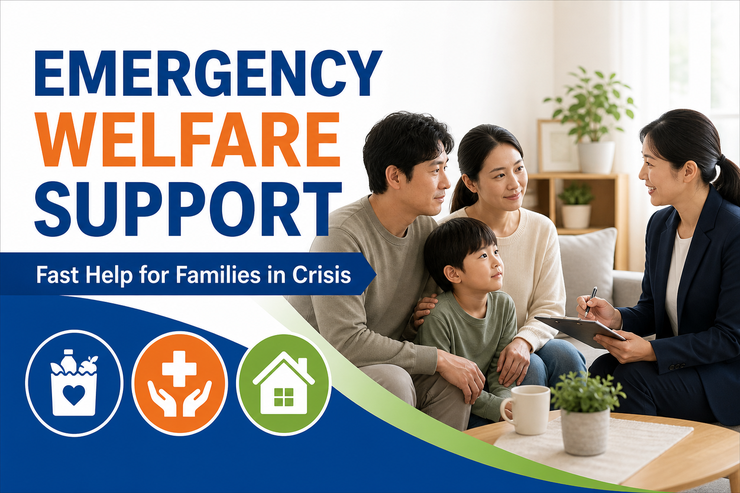
Korea’s Emergency Welfare Support program provides rapid assistance when a household suddenly cannot maintain basic living conditions because of unemployment, serious illness, divorce, domestic violence, or another crisis. Unlike ordinary welfare programs that complete a full income and asset review first, emergency welfare can provide support quickly and verify eligibility afterward.
What Is Emergency Welfare Support?
The program is a public-assistance system that can provide living expenses, medical costs, housing, education, and other urgent support. Its “support first, investigate afterward” approach is designed to respond quickly when delay could worsen a household’s situation.
What Counts as a Crisis?
- The primary income earner dies, disappears, leaves the household, or is detained, causing a loss of income
- A household member suffers a serious illness or injury
- A person experiences domestic violence, abuse, neglect, or abandonment
- A fire or similar event makes the home uninhabitable
- Unemployment or business closure causes a sudden loss of income
- Another circumstance is recognized as a crisis by the local government
Because recognized crisis grounds are broad, people who are unsure should contact the welfare counseling service rather than deciding not to apply on their own.
Income and Asset Standards
A household may still be restricted if its income or assets exceed program limits.
- Income: Generally no more than 75% of the standard median income
- Property: A regional ceiling applies, with different limits for major cities, smaller cities, and rural areas
- Financial assets: A household-size living-preparation allowance plus an additional permitted amount
Exact figures change by year, household size, and region. Contact the local community service center or call 129 for the current standard. The program gives priority to confirming the crisis, so applicants do not need to calculate every threshold before asking for help.
Types of Support
- Living expenses: Cash assistance for urgent food, clothing, and basic household needs
- Medical support: Eligible examination and treatment costs, generally up to KRW 3 million
- Housing support: Temporary accommodation or rent assistance
- Education support: School supplies, tuition, and related costs for children in a household facing crisis
- Other support: Childbirth expenses, funeral expenses, and heating costs
- Linked services: Referrals to the Korean Red Cross, welfare institutions, and other support organizations
Living and medical assistance is often initially provided once. If a separate new crisis occurs, an additional round may be considered through a local case review.
How to Request Help
- In person: Visit the city, county, district, or local community service center responsible for your residence.
- By telephone: Call the Health and Welfare Counseling Center at 129.
- Report by another person: A neighbor, relative, social worker, or other person may report a household believed to be in crisis.
A responsible official may visit to confirm the crisis. Once confirmed, assistance can be provided quickly while detailed income and asset checks continue.
Household-Based Support
Support is generally calculated for the household. Certain items—such as medical assistance, education, childbirth expenses, and funeral expenses—may be provided to the household member who directly needs them.
Frequently Asked Questions
Can a Basic Livelihood Security recipient apply?
Overlapping assistance may be restricted. Ask the local office or 129 to review the specific benefits already received and the new crisis.
Does exceeding an income standard always mean rejection?
Not necessarily. In urgent circumstances, limited discretionary support may be considered under applicable local rules. Request an official assessment.
How quickly is help provided?
The program is designed for rapid response. Timing depends on confirmation of the crisis and the type of support, but assistance may begin within days in urgent cases.
Practical Advice
- If a crisis occurs, call 129 or visit the local community service center before trying to determine eligibility alone.
- Remember that another person can report a neighbor or family member who appears to be in crisis.
- Ask whether longer-term programs, including Basic Livelihood Security or employment-related benefits, can follow the emergency assistance.
- Prepare available evidence of the crisis, income loss, medical condition, housing problem, or other urgent need, but do not delay making contact if documents are incomplete.
This article provides general information. Eligibility, amounts, and duration depend on current rules, household circumstances, and local assessment. Call 129 or contact the local community service center for an official decision.