2026 Comprehensive Income Tax: Filing Period and Step-by-Step Guide

2026 Korea comprehensive income tax filing guide

If you are a freelancer, sole proprietor, or jobber, you must file a comprehensive income tax return every May.Everything from reporting period to method and refund has been organized in one place.💡 As of the time of writing this article (July 2026), the regular reporting period for comprehensive income tax for 2025 has already passed.

If you missed reporting, please refer to the ‘Report after the deadline’ section below, and if you want to prepare for the next report in advance, you can use the entire flow as reference material.

What is comprehensive income tax?

Comprehensive income tax is a tax that is reported and paid by adding up all the income (business, labor, interest, dividends, pension, and other income) generated by an individual during the year.For office workers, the company settles taxes on their behalf through year-end tax settlement, but business owners, freelancers, and people with additional income other than salary must organize and report one year’s worth of income on their own.

Who to report – Am I covered?If any of the following applies, you must report comprehensive income tax yourself.

Sole proprietor/freelancer with business incomeIf you have additional income, such as side jobs or platform work, in addition to earned incomeIf there is rental income, interest/dividend income (exceeding a certain standard), etc.Conversely, if any of the following applies, separate reporting is not required.

If you only have earned income and the company has completed year-end tax settlementIf you only have retirement income and business income subject to year-end tax settlementCases where there is only non-taxable or separate taxable income (lottery winnings, capital gains on some calligraphy, paintings, antiques, etc.)If you only receive public pensions such as the national pension and the tax calculation has already been completed by the Pension Service

2026 reporting period

Regular reporting period: May 1 – June 1, 2026 (the original deadline, May 31, was Sunday, so it was extended until the next weekday, June 1)Target income: Income generated from January 1 to December 31, 2025Those subject to sincere reporting confirmation (businesses exceeding industry-specific sales standards): Reportable until June 30, 2026The reporting period runs similarly every year from May 1 to May 31, and if the last day falls on a weekend, it is often automatically extended to the next weekday.It is safe to check the exact schedule every year with the National Tax Service notice.

4 ways to reportHometax (hometax.go.kr) e-filing: The most widely used method.After logging in, go to the ‘Comprehensive Income Tax Report’ menu and follow the instructions.

Sontax (mobile app): The same procedure as Hometax can be performed on mobile.Visit the tax office or submit by mail: Prepare and submit documents in personDelegation to a tax agent (tax accountant): If your income structure is complex, you may want to entrust your report to a tax accountant.

It is easier to use the ‘Fill All’ service provided by the National Tax Service.Since the National Tax Service pre-calculates and fills in income, expenses, deduction amount, and tax amount due based on data held by the National Tax Service, if you receive a notice, you often just check the contents and click the ‘Report’ button.

Although withholding tax details and card usage details are automatically checked in Hometax, you must prepare the rental agreement and certain deduction documents yourself.In particular, monthly rent or some medical expense items may not be reflected automatically, so check in advance.

What if I missed reporting?— Report after deadline

If you do not report by the deadline, you will be subject to a non-reporting penalty of up to 20% of the tax amount paid.However, even after the deadline has passed, you can receive some reduction in additional tax by filing **’report after deadline’**.

If you voluntarily report within one month after the deadline, the additional tax is reduced by 50%, and the faster you report, the higher the reduction rate.Even if you cannot afford to pay taxes right away, it is important not to delay because you can reduce the additional tax burden by filing first.

When will I receive my refund?

In principle, payment is made within 30 days after the reporting/payment deadline (usually May 31 or June 1), and in reality, it is often deposited into the account entered when reporting, usually between late June and early July.You can check the processing status in the ‘Refund Inquiry’ menu of Hometax.

Finishing Tips

If you are a freelancer or jobber, there is a high possibility of receiving a refund after reporting, so it is advantageous not to skip reporting even if your income is low.If there are any deductions you missed after reporting, you can receive an additional refund through a correction claim within 5 years.

Local income tax can be reported after the comprehensive income tax return, and can also be paid through Witax, Internet Giro, etc.This article has been written for general information purposes.

The exact reporting eligibility, deadline, and procedures may vary depending on the National Tax Service notice every year, so please be sure to check with the National Tax Service’s Hometax (hometax.go.kr) or your local tax office before reporting.
2026 Year-End Tax Settlement: Income and Tax Deduction Guide

2026 year-end tax settlement deduction guide

Year-end tax settlement called ‘13th month bonus’.Since items and limits change slightly every year, it is easy to miss out on possible deductions if you do not organize them in advance.

We have divided the deduction items applicable in 2026 (based on 2025 imputed income) into income deductions and tax credits.💡 For your information, the year-end tax settlement that will be conducted in early 2026 is a procedure that is based on the income earned during the year of 2025.In other words, the expression “2026 year-end tax settlement” refers to the time of reporting, and the actual application standard is the income attributable to 2025.

What is the difference between income deduction and tax credit?

Income deduction: A method of subtracting a certain amount from the ‘income’ itself, which is subject to tax.The higher the tax rate bracket, the greater the tax savings.

Tax deduction: A method of deducting a certain amount (or percentage) directly from the calculated tax amount.It is relatively easy to predict because a certain percentage of expenses is reduced regardless of the size of income.

If you take care of both methods, your refund amount will vary greatly, so it is important to take care of items that fit your income level and spending pattern.Major income deduction itemsitemdetailpersonal deductionIf your spouse, parents, or children have an annual income of 1 million won or less (if you only have earned income, your total salary is 5 million won or less), you are eligible for basic deduction.

Parents who live separately may be required to provide proof of actual support.Credit card, etc. usage deductionDeduction for amounts used in excess of 25% of total salary.

The deduction rate for check cards and cash receipts is higher than for credit cards.Comprehensive housing subscription savingsA portion of the amount paid by the head of the household without a home is deducted from income.

Deductions related to housing fundsDeduction for housing-related expenses, such as repayment of principal and interest on a lease loanNotable change in 2026 (attributable to 2025): Starting from July 1, 2025, swimming pool and gym usage fees will be classified as cultural and sports expenses, and an additional deduction rate of 30% will be applied to credit card income deductions.If you spend a lot on exercise, this is an item you should not miss.

Major tax deduction itemsitemDeduction rate/limitPension account (pension savings + IRP)Tax deduction based on payment amount, up to 9 million won for both accounts combinedmedical expenses15% deduction for expenses exceeding 3% of total salaryeducation expenses15% deduction for education expenses for yourself and your children.There is no limit to 15% of your own graduate school tuition, and your child’s university tuition is capped at 9 million won per person (maximum 1.

35 million won).Monthly rent tax deductionThis applies to non-household heads of households with a total salary of KRW 80 million (comprehensive income amount of KRW 70 million) or less.

15-17% of monthly rent payment, limit is 10 million won per yearMarriage Tax CreditA deduction of 500,000 won per person, up to 1 million won, is provided to couples who register their marriage from 2024 to 2026.Can only be received once in a lifetimeIn terms of education expenses, it is important to note that if a child’s income exceeds 1 million won, he or she is not eligible for personal deductions and therefore cannot receive a deduction for education expenses.

In addition, the scope of education expense deductions for arts and physical education academy fees for first and second graders of elementary school is scheduled to expand from 2026, so it is a good idea to keep it if your child is of that age.

Income deduction vs tax credit, which is more advantageous?

Income deductions are relatively advantageous for high-income earners with high tax rates.Because the tax base itself is lowered, the higher the tax rate bracket, the greater the tax savings.

Since tax credits reduce a certain percentage of expenditures regardless of the size of income, the effect is felt clearly even for low-income workers.It is a good idea to consider your expected tax bracket and expenditure items and devise a strategy on which deductions to take first.

How to prepare

The Hometax year-end tax settlement simplification service is held every year in mid-January.Most items (card usage, medical expenses, education expenses, etc.) can be loaded automatically here.

For items for which data is not displayed in the simplified service (some academy fees, donation receipts, etc.), you must obtain supporting documents directly from the relevant institution and submit them to the company.The income and age conditions for the personal exemption for dependents may change every year, so it is recommended to check eligibility before applying.

Finishing Tips

Increasing the use of check cards and cash receipts rather than credit cards is often advantageous in terms of deduction rates.Pension savings and IRP have a significant tax saving effect, but there are disadvantages to early withdrawal, so it is recommended to set the payment amount along with your retirement fund plan.

Since the monthly rent tax deduction only applies to householders who do not own a home, check the tenant’s name and householder requirements in the contract in advance.This article has been written for general information purposes.

The exact deduction requirements and limits may vary depending on individual circumstances, so be sure to check with the National Tax Service’s Hometax (hometax.go.kr) or a tax expert before reporting.

2026 Youth Startup Grants: Programs, Eligibility, and Applications

2026 Korea youth startup grants and application guide

If you are a young person preparing to start a business, these are government-supported projects that you would not want to miss.In 2026, the budget to support start-ups and small business owners will be the largest ever, increasing the scale of existing businesses and partially changing the support structure.

In addition to representative businesses, we have also summarized benefits that vary depending on the region.

Startup support in 2026, what will change?

The main trend of the 2026 integrated notice is that more emphasis is placed on supporting the growth of early-stage and take-off companies that are already operating a business, rather than expanding new startups.While the budget for existing projects such as the initial startup package, startup leap package, and youth startup academy increased, the proportion of some new startup-oriented projects decreased.

Additionally, the scope of support has been expanded.In the meantime, support was often provided only up to the prototype (mock-up) stage, but starting in 2026, businesses with expanded support structures have emerged to include mold production, initial mass production, and testing and certification, all the way to actual product launch.

Representative start-up support funds – a step-by-step look

1. Pre-startup package (idea stage)

Target: Prospective entrepreneurs without a business registration certificate and without corporate representation rightsSupport details: commercialization funds (average approximately 40 million won), entrepreneurship education, mentoringCharacteristics: Often operated on a university/region basis, the host organization and recruitment track may vary depending on the university or region of residence.As this is a highly competitive business, the completeness of the business plan is a key factor in determining success.

2. Youth Entrepreneurship Academy (representative program for early-stage young entrepreneurs)

Target audience: Under 39 years of age, business representative within 3 years of starting a businessSupport details: Project cost up to KRW 100 million (within 70% of total project cost), startup preparation space, startup education and coaching, and technical supportSelection size: 850 people in total — 330 global, 310 local, 140 investment typeRecruitment schedule (example): Project announcement (January) → Application/reception (January-February) → Evaluation/announcement (February-March) → Program progress (March-)In particular, since the regional-specific track separately selects young people who start businesses in rural areas rather than the metropolitan area, local entrepreneurs may have an advantage in terms of competition.3. Initial Startup Package · Startup Leap Package (if already running a business)Funding and infrastructure support that goes beyond prototypes to product launchAs the budget expands in 2026, the scope of support for growth-stage companies expands.

Suitable for young entrepreneurs who already have initial sales or are well on their way to starting their business.

Youth Startup Tax Reduction System

This is a system that reduces the tax burden in the early stages of starting a business, and if you meet the requirements, you can receive tax relief for up to 5 years.⚠️ Change in 2026: The tax reduction rate has been revised to vary depending on the region of business start-up.In other words, the amount of tax benefits you can receive may vary depending on where you start your business, so it is a good idea to check the difference in tax reduction rates in advance before deciding on a business location.

Things to take care of by region

Local governments’ own start-up support projects: In addition to the government’s large-scale projects, each metropolitan and basic local government often operates separate youth start-up subsidies, rent support, and start-up space provision projects.Regional-specific track: Projects that have a separate track for selecting local youth, such as the Youth Entrepreneurship Academy, may have lower competition compared to the metropolitan area.

Differential tax reduction rates: As explained earlier, tax benefits vary depending on the region where you start your business, so if you plan to relocate, you must compare regional conditions.Since the types and conditions of businesses operated in each region are very diverse and change frequently, rather than listing all individual businesses, we recommend that you check the comprehensive notices on K-Startup (k-startup.go.kr) and the Startup Support Center/Economic Promotion Agency website in your (planned) region of residence.

How to apply and contact information

K-Startup (k-startup.go.kr): Check and apply for government start-up support project integrated noticeCorporate website (bizinfo.go.kr): Check detailed announcements for each businessSmall and Medium Business Integrated Call Center: 1357 without area codeEach project has a set application/reception period and sometimes revised notices are issued, so be sure to check the latest version of the notice.

Finishing Tips

If you have not yet registered your business, consider the Preliminary Startup Package, and if you have already started a business within 3 years, consider the Youth Startup Academy first.If you are planning to start a business in a local area, you can find a more advantageous combination by comparing regional specialized tracks, the local government’s own business, and tax reduction rates.

The more competitive the business, the more important the completeness of the business plan is, so it is also worth considering a strategy of applying to multiple businesses at the same time.This article has been written for general information purposes.

Qualification requirements, support amounts, and schedules for each business may change every year, so please be sure to check the latest announcements through K-Startup (k-startup.go.kr) or the Small and Medium Business Integrated Call Center (1357) before applying.

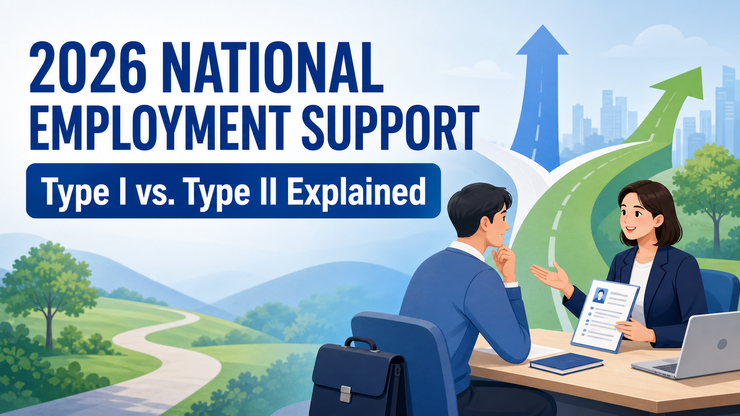
2026 National Employment Support System: Type I vs. Type II

2026 National Employment Support System Type I and Type II guide

The National Employment Support System is a system that must be checked by job seekers, freelancers, career-interrupted women, and unemployed young people who do not receive unemployment benefits.As the job search promotion allowance was increased in 2026, the gap between types 1 and 2 support widened.

Let’s figure out which type is right for you.

What is the National Employment Support System?

The National Employment Support System is a policy where the government provides living expenses and employment support services to job seekers who are in the blind spot of employment insurance.It supports a wide range of targets, including young people, freelancers, self-employed people, and women with career breaks who cannot receive unemployment benefits, and is divided into Type 1 or Type 2 depending on income level and employment experience.

Type 1 vs Type 2, key differences

To summarize in one line, **”Type 1 is cash-centered, and Type 2 is service/activity cost-centered”**.If you are in urgent need of living expenses right away, it is best to consider type 1 first, and if you need a job change or training, it is best to consider type 2 first.

Type 1 — Job Search Promotion Allowance (focused on cash support)As of 2026, 600,000 won per month will be paid for up to 6 months (increased from the existing 500,000 won per month)A total of 3.6 million won can be received in 6 monthsIf you have dependents, an additional payment of 100,000 won per person per month is provided to up to 4 people (maximum 400,000 won per month).

Young people aged 18 to 34 can participate in Type 1 as a youth special exception even without employment experience as long as they meet the asset criteria (500 million won or less).However, the conditions are more stringent than Type 2, so you must carefully check the standards for income, assets, and employment experience.

Type 2 — Focus on participation in employment activity plans

There is no job search promotion allowance paid in a flat amount every month.Establishment of an Employment Activity Plan (IAP) Participation allowance of up to KRW 250,000 and participation incentive allowance of up to KRW 100,000 are paid.

The training participation support allowance will be abolished from 2026, so training costs will be supported through the Tomorrow Learning Card, but no separate training allowance will be paid.Instead, income and property standards have been relaxed, making it relatively easy for young people and general job seekers to participate.

Provides a wide range of job training, employment counseling, interview coaching, and employment-linked services.⚠️ Point of change in 2026: Type 1 allowance was increased while type 2 training allowance was abolished, making the gap between the two types of cash support wider than before.It is advantageous to first check whether you qualify for Type 1 qualifications.

Common Benefits – Employment Success Allowance

If you successfully find a job after participating in either type, you can receive an employment success allowance of up to 1.5 million won.

500,000 won for 6 months of employmentAfter another 6 months of service (total of 12 months), 1 million wonHowever, this allowance is paid only if separate requirements are met, such as earning less than 60% of the median income.

How to apply

Register your resume at **Worknet (work.go.kr)** and complete the job application.Apply through the ‘National Employment Support System Application’ menu on the Employment 24 (work24.go.kr) website or app.

After submitting the application, the competent employment center will notify you of whether you are eligible for benefits (Type 1/Type 2) within approximately one month.If you visit an employment center and establish an employment activity plan (IAP) with a counselor, your allowance will be paid to your designated account every month starting from the following month.

If you have difficulty visiting, you can apply online, but consultation at the employment center is required during the eligibility screening and IAP establishment stages.

Frequently confused part

If I work part-time, can I not receive job search promotion allowance?Part-time work itself does not prevent benefits, but benefits may be reduced or suspended depending on working hours and income.

It is safe to check with your counselor before work.Can college students participate?

Students on deferred graduation and students currently in their final semester can participate, but documents such as proof of enrollment and transcript may be required.If I participate once, can I never get it again?

In principle, you can reapply after 3 years from the end date of employment support.How is Type 1 employment experience recognized?

Only work with a history of signing up for the four major insurance policies is recognized, and part-time work for cash or unpaid work at a family business is not recognized.Can I receive unemployment benefits in conjunction with unemployment benefits?

While receiving unemployment benefits, you cannot receive National Employment Support System benefits at the same time.

Finishing Tips

If you are a young person between the ages of 18 and 34 and have no employment experience, check out the ‘Youth Special’ type 1 qualification first.If the conditions are right, you may be able to receive much more favorable cash assistance.

If you falsely report your income or assets or hide your employment, you may be subject to a 5-year ban on re-participation and criminal punishment as well as a refund of your support funds, so you must report them accurately.If you are uncertain about the type, we recommend that you first contact the Ministry of Employment and Labor’s Customer Service Center (1350 without area code) before applying.

This article has been written for general information purposes.The exact eligibility requirements and support amount may vary depending on individual circumstances, so please be sure to check with Work24 (work24.go.kr), your local employment center, or the Ministry of Employment and Labor Customer Service Center (1350) before applying.

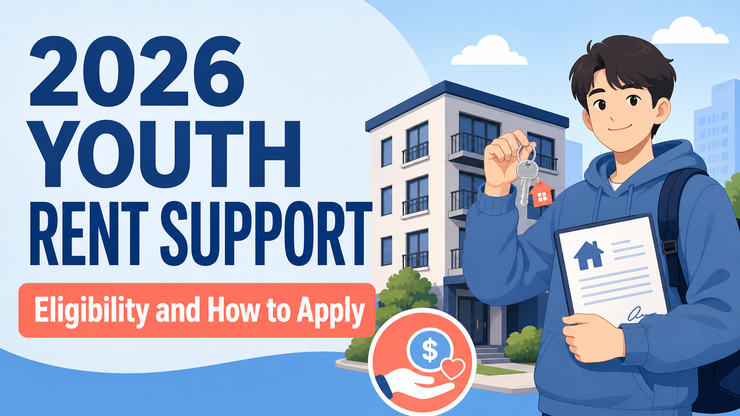
2026 Youth Rent Support: Eligibility and How to Apply

2026 Korea youth rent support eligibility and application guide

Youth monthly rent support is a system that is not worth missing if you are a young person living alone.It has been operated as a temporary project, but from 2026, it has changed to a permanent project recruiting new people every year, lowering the application threshold even further.

We have also summarized the changes.

What is youth monthly rent support?

Youth Rent Support is a housing welfare system where the government (Ministry of Land, Infrastructure and Transport) provides a certain amount of cash every month to relieve the rent burden of young people living on a monthly rent basis.The official name was ‘Temporary Special Support for Monthly Rent for Youth’, but from 2026, the operation method changed to a permanent application system.

Biggest change in 2026: Temporary business → Continued business

This system has been temporarily operated twice since it was first introduced in 2022 and has supported over 220,000 young people.However, since it is a limited-time project with a fixed budget, the application period is short, and in some cases, it closes early when the budget is exhausted.

As the burden of housing costs for young people continued, this system was selected as a national task, and from 2026, it was converted into an ongoing project to recruit new beneficiaries every year.In 2026, we plan to select approximately 60,000 new beneficiaries across the country.

Additionally, the requirement to subscribe to a subscription account, which was previously mandatory, has been abolished from 2026.

Support eligibility and income criteria

You must meet all of the following conditions to apply:Age: 19 to 34 years old (if there is military service completion period, some local governments extend the application to up to 39 years old)Housing type: Homeless youth living separately from their parents and actually residing in a house within the deposit/monthly rent standards.Youth household income: 60% or less of standard median incomeOriginal household (including parents) income: 100% or less of standard median incomeHowever, if certain conditions are met (over 30 years of age, married, unmarried father/mother, income exceeding a certain standard even under 30 years of age, etc.), there are cases where the parents’ income is not separately screened and the youth’s income is judged only.

It is best to check in advance whether you meet these conditions through Welfare’s mock calculation service.

Support amount

Up to 200,000 won per month (however, support is provided within the range of actual monthly rent paid and 200,000 won is not unconditionally paid)Support period: Basic up to 12 months (depending on local government projects, support may be extended up to 24 months)The maximum amount received is approximately 2.4 million won per 12 months, or more if the local government’s own projects are added.

Application period and method

The first application for the Ministry of Land, Infrastructure and Transport in 2026 was held from 9 a.m. on March 30, 2026 to 4 p.m. on May 29, 2026.After conversion to a continuous project, the application period will be operated regularly every year in accordance with the budget and guidelines of the Ministry of Land, Infrastructure and Transport, so if you miss this period, you must wait for the next application notice.

Online application: Bokjiro (bokjiro.go.kr)Offline application: Visit the administrative welfare center (community center) in your jurisdiction of residenceRequired documents: Application for monthly rent support, income/property report, rental agreement and documents proving monthly rent transfer for the past 3 months, copy of bankbook, family relationship certificate, etc.Some local governments (Seoul, Incheon, etc.) also operate their own youth monthly rent support projects separately from the Ministry of Land, Infrastructure and Transport projects.

You can also check your local youth portal or city/district office website to avoid missing opportunities for duplicate support.

Frequently confused part

What if the lease contract period has expired and I am still living there?You can apply if you are in an implied renewal with the lessor.

It is a good idea to state in the special notes section of your application that the contract has been implicitly extended on the same terms.Residents of public rental housing, those who rent houses owned by immediate family members, and those who live in sublease with multiple people living in one room are often excluded from support, so check before applying.

If you have previously received the maximum number of applications (24) through limited-time special support, reapplication may be restricted.

Finishing Tips

Before applying, first check whether you meet the income and property standards using Welfare’s mock calculation service.It is advantageous to provide proof of monthly rent transfer details by depositing them into an account.

If you have been paying in cash, we recommend that you switch to bank transfer in the future.In addition to the Ministry of Land, Infrastructure and Transport’s project, you can expand the scope of support by checking the local government’s own youth rent support project.

This article has been written for general information purposes.The support conditions, amount, and application schedule may change depending on the budget situation, so please be sure to check the latest information through Bokjiro (bokjiro.go.kr), your local administrative welfare center, or the Ministry of Land, Infrastructure and Transport before applying.

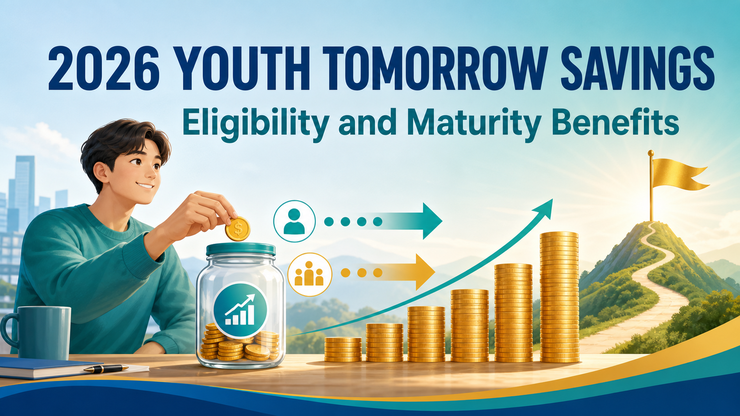
2026 Youth Tomorrow Savings Account: Eligibility and Maturity Benefits

2026 Youth Tomorrow Savings Account eligibility and benefits

Youth Tomorrow Savings Account, a system where the government adds up to 300,000 won if you save 100,000 won per month.This is a representative asset formation support project operated by the Ministry of Health and Welfare to help low-income youth become independent.

We have also summarized the changes as of 2026.

What is Youth Tomorrow Savings Account?

The Youth Tomorrow Savings Account is an asset formation support project in which young people who are working but do not have sufficient income save a certain amount every month, and the government saves an equal or larger amount.It is designed so that if you maintain it consistently for 3 years, you can receive a lump sum at maturity.

2026 membership requirements

You must meet all three conditions to apply.Age: 15 to 39 years old at the time of applicationIncome criteria: Earned income or business income of more than 100,000 won per month (part-time work, freelance activities, etc. are also included, but proof of income must be available)Household income: The household’s recognized income is less than 50% of the standard median income.

When calculating household income, not only your own income but also some of the income and assets of family members living with you may be reflected, so if you live with your parents, you must check this.⚠️ What has changed from 2026: Previously, applicants with income below 100% of the standard median income were eligible to apply, but from 2026, the support target has been narrowed to low-income youth with income below 50% of the median income.Instead, a new separate product (Youth Future Savings Savings) has been created for young people with income below 200% of the median income, so if you do not meet the income criteria, we recommend looking into this product as well.

Support amount and maturity amount

You save between 100,000 and 500,000 won every monthThe government provides matching support for a fixed amount of up to 300,000 won per month.If you complete 3 years (36 months), you can receive up to 14.

4 million won including your own payment and government support.In addition, depending on the conditions, additional subsidies such as dehydration subsidy and tomorrow’s growth incentive may be attached.

However, this depends on detailed conditions such as participation in self-support work projects, so individual confirmation is required.Required conditions for receipt of maturityYou cannot receive the full amount simply by staying for three years.

All three conditions below must be met.Maintaining a bank account and steady income for 3 yearsAttend more than 10 hours of self-reliance competency training related to finance and employmentSubmit a fund use plan that outlines how to use the maturity funds

Application period and method

New recruitment in 2026 was conducted for 17 days, from Monday, May 4, 2026 to Wednesday, May 20, 2026.If this period has already passed, you can wait for next year’s recruitment announcement or consider alternatives such as the Youth Future Savings Fund mentioned earlier.

Online application: Bokjiro (bokjiro.go.kr)Offline application: Administrative welfare center (community center) under the jurisdiction of residence — Application can also be made at other community centers within the same city, county, or districtContact information: Health and Welfare Counseling Center (129 without area code), Asset Formation Support Call Center (1522-3690)Summary of reorganization points in 2026Support target: 100% or less of median income → Reduce to 50% or less of median income (intensive support for low-income groups)Period during which accumulation can be suspended: Up to 6 months → Expanded to up to 12 monthsThe suspension of accumulation can be extended for up to 2 years for reasons such as military service, pregnancy, childbirth, or childcare leave.

Finishing Tips

Before applying, it is a good idea to calculate in advance whether your and your household members’ income and assets meet the 50% median income standard.If you do not meet the income criteria, compare other youth asset building products such as Youth Future Savings and Youth Leap Account.

Since the recruitment period may vary slightly every year, we recommend that you periodically check the announcements on the welfare website.This article has been written for general information purposes.

For exact eligibility requirements and the latest application schedule, please check with Bokjiro (bokjiro.go.kr), your local administrative welfare center, or the Health and Welfare Counseling Center (129).

2026 Small Business Funding: Policy Loans and Grants Guide

2026 Korea small business policy loans and grants guide

Anyone who is self-employed has probably had the experience of checking their bank account balance and sighing as the monthly fixed cost date approaches.Rent, labor costs, and material costs are rising every day, but sales are not as high as expected, which often causes headaches.

To be honest, in the early days of my business, I also missed an opportunity because I hesitated because I heard rumors that there was a government subsidy and didn’t know where or how to apply.I remember giving up before I even started because the application eligibility requirements and documents seemed too complicated.

However, small business policy funds and government subsidies are the most realistic solution that can significantly reduce the burden of fixed costs if you properly understand the conditions and application procedures.As of 2026, we will clearly outline the policy funds and key support measures that small business owners must take care of, as well as how to apply.

Policy funding support that protects your bank account — refinance loan and management stabilization fund

The biggest burden when running a self-employed business is by far the high interest rate on loans.For small business owners suffering from multiple, high-interest debts, the government continues to implement a low-interest conversion loan policy.

The first thing to check is ‘small business refinance loan’.This is a system that converts high-interest loans of more than 7% or second-tier financial loans for which it is difficult to extend the maturity into low-interest, long-term installment loans of about 4.

5% per annum.It is very effective in freeing up your finances as it can reduce your monthly interest costs by nearly half.

Additionally, you must also have a ‘general management stabilization fund’ that can be used when urgent operating funds are needed.It is a policy fund implemented directly by the Small Business Corporation or supported through a guarantee, and significantly reduces the initial repayment burden through lower interest rates and grace period benefits than commercial banks.

Practical cost support measures to reduce fixed costs

In addition to policy funds loans, there are a variety of cost preservation policies that can be refunded or receive direct support.In particular, it is recommended that you apply for support for all fixed expenses directly related to sales, such as electricity bills and delivery/fees.

A representative example is ‘special support for electricity bills for small business owners’.This is a method of directly deducting or refunding electricity bills of up to 200,000 won for small business owners whose sales volume is below a certain standard.

The application process is so simple that you only need to enter your business registration number and electricity bill customer number.In addition, the ‘delivery and transportation cost support’ policy has been strengthened for restaurant and service industry owners operating through the platform.

You can receive cash support for monthly accumulated delivery fees and courier costs within a certain annual limit, so you can receive great help by simply preparing your business registration certificate and proof of sales.

Small business support application strategy that is right for me

So what order should you approach when actually applying?First, we recommend that you access the ‘Small Business Policy Fund’ website or the ‘Small Business Madang’ platform and verify your business.

This is because policy funds are often closed early when the budget is exhausted on a quarterly or monthly basis.If you have a high-interest loan: Apply immediately after checking eligibility for a small business policy fund refinancing loanSmall business with small sales: Apply for refund of fixed costs such as special support for electricity bills and delivery fee supportWhen considering re-starting a business after relocating or closing a business: Link to rebuilding support projects such as the Hope Return PackageIf you obtain the major documents such as ‘Business Registration Certificate’, ‘Sales Proof (Value-Added Tax Base Certification)’, and ‘Income Amount Proof’ in advance as electronic documents from Government 24 or Hometax, you can significantly save time on the day of application.

In difficult times, actively seeking out support systems provided by the government is the way to increase business viability.I recommend that you check right now to see if any of the items we announced today apply to you.

I hope that your business will take a powerful leap forward once again based on strong support measures.