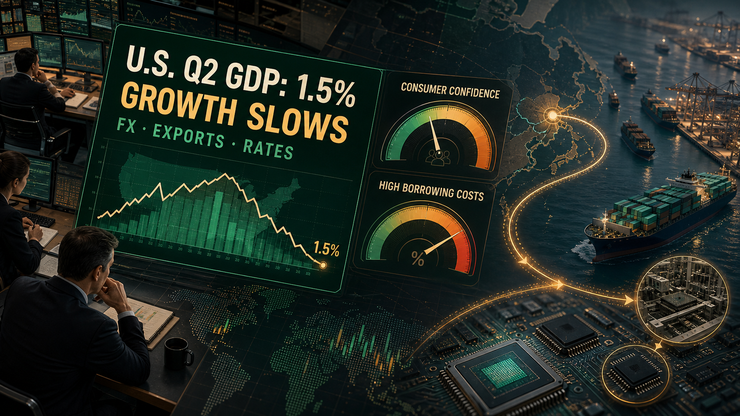
U.S. real GDP grew at a 1.5% annualized rate in Q2 2026, slowing from 2.1% in Q1. Consumer confidence also slipped to 90.8 in July from 92.2 in June, pairing softer output with weaker sentiment.
What changed
AP’s August 1 economic roundup reported that growth undershot expectations. Weekly initial jobless claims remained historically low at 197,000, but June payroll growth slowed to 57,000, pointing to less labor-market momentum.
Why lower rates are not automatic
Slower growth supports an easing case, but inflation and energy-price pressure remain. Average credit-card rates are still near 20%, while mortgage rates are at roughly a one-year high, keeping household financing conditions tight.
What it means for Korea
Weaker U.S. demand could weigh on Korean autos, electronics and consumer-goods exports. A stronger case for eventual U.S. rate cuts could, however, reduce dollar strength and support the won and Korean financial assets. Semiconductors remain heavily driven by the AI investment cycle, so one GDP reading is not enough to call a chip-demand reversal.
What to watch next
- The July U.S. employment report due August 7
- U.S. Treasury yields and the won-dollar exchange rate
- Consumer spending and business investment
- Korean chip and auto export orders
Sources
AP U.S. economy roundup · U.S. Labor Department release schedule
Information as of August 2, 2026. Korea-related implications are analysis and may change with market conditions.